
Click to view the PDF You’re Not Powerless
You’re Not Powerless. Here’s Where You Still Have Leverage
The 3 Levers Ordinary People Still Control (And how to actually use them)
here’s a black pill meme circulating social media right now that essentially says ordinary people are powerless. That everything important happens somewhere else. In Washington. In boardrooms. In courts you’ll never step foot in.
And it’s a comforting meme. Because if it’s true, it means you don’t have to do anything about the mess we’re in. You’re helpless to stop this moving trainwreck and so you’re off the hook. Feel free to look away, or watch as we crash and burn but don’t worry—you couldn’t have done anything anyway.
That couldn’t be farther from the truth.
The truth is that we got in this mess because people looked the other way. Because ordinary people didn’t think the business of running this country was any of ours. We found just voting every two years to be quite exhausting enough—having to know about the issues and candidates and all that! Because it was easier to abdicate responsibility to the greedy, immoral and avaricious bastards that wanted to use our government for their grift, rather than to help ethical, honest and average people take the reins and start running things. Or step in ourselves.
That’s on us.
But now it’s time to take back the government. After all, it’s only a democracy if it really is run by the people. If it’s run by corporations, or billionaires, or evil idiots that want to rule the world, or artificial intelligence or robots, we have whole other names for it.
So let’s make this country a democracy again. Here are three levers that have not been taken from you, and cannot be taken. That you can use right now. Three places where ordinary people still shape outcomes every single day.
Not in theory. In practice.
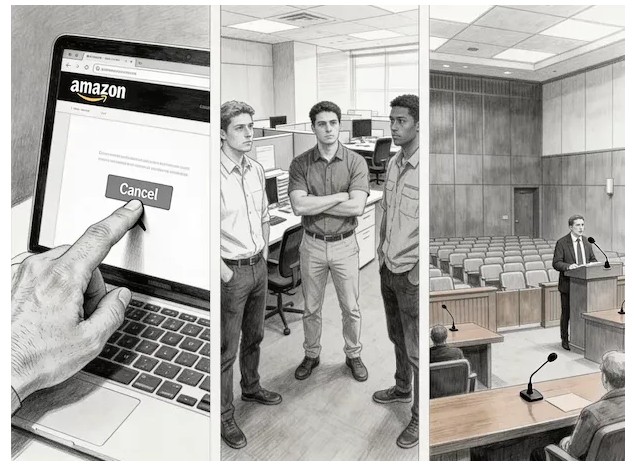
1. Money
Where it flows is where power grows
Every dollar you spend is a tiny vote. Not symbolic but structural. And we’ve been voting like crazy for our corporate overloards and the billionaire class that is oppressing us.
We have been carefully groomed to be excellent consumers of goods. And thats a big problem. We take the easy route of paying for convenience, of throwing away rather than fixing, of never making our own but paying for the convenience of someone else cooking, creating, building, growing, repairing. This isn’t how our grandparents lived, and it’s not how many of our parents lived.
Our golden handcuffs have become a supply chain. Our money, our attention, our desires, our laziness, all routed upward to keep the ruling class comfortable. Breaking that chain is simple, though not easy: stop feeding it one link at a time.
A company raises prices, and we groan, but we still buy.
They shrink the package, and we groan, but we still buy.
They make the product cheaper, flimsier, uglier, harder to repair, more uncomforatable to endure and harder to price compare and we groan, but we still buy.
Variable pricing. Planned obsolescence. Subscription traps. Quantity reductions, quality collapse, service non-existent.
We. Still. Buy.
And every time we do, we send the same message upward: keep going.
This is a kind of indentured servitude we have the power to break. And we must break it. The only way to do that is to withdraw funding of these corporations, by not buying. Companies do not respond to outrage. They respond to revenue. If the money keeps flowing, nothing changes. If the money stops, everything changes.
What to do:
- Redirect, don’t just boycott. Boycotting is good, but do better. Don’t just stop buying. Move your spending somewhere else. From national chains to local businesses. From hostile companies to neutral or aligned ones.
- Target pressure, not everything at once. Don’t try to do everything at once, you’re setting yourself up for failure. Pick one company. One brand. One pressure point at a time. Scattershot outrage gets ignored. Concentrated pressure gets noticed.
- Cancel quietly and consistently. You don’t need to announce it. You need to do it.
Subscriptions. Services. Automatic renewals. These are profit machines because people forget. Start tracking what you’re funding and whether that’s really where you want your monthly budget to go. - Watch for price pass-throughs. When companies raise prices and blame “external forces,” remember: if they keep the increase after those forces are gone, that’s profit taking.1
- Learn to be self-reliant. Learn how to make it, grow it, fix it, do without it. Go to the store and buy it instead of tapping a button and paying a premium price to have it delivered to your door (by exploited workers for outrageous fees). Start turning your own consumerism into self-reliance instead.
What this does:
It starves bad actors and strengthens alternatives. Markets follow behavior faster than politics ever will.
2. Labor
Nothing runs without people showing up
Every system you interact with runs on human participation. Workers. Contractors. Specialists. Quiet professionals holding the whole thing together.
When labor cooperates, systems function.
When labor organizes, systems have to negotiate.
When labor withdraws, systems stall or break.
That’s not ideology. That’s basic mechanics.
One worker has no leverage. That’s the trap. You can be replaced, ignored, or managed around. Workers acting together are a different force entirely. That’s what a union is. Not a slogan. Not a club that only ever collects dues. It is a structure that turns a group of replaceable individuals into a single negotiating body that cannot be ignored.
Without that structure, every worker is on their own. Asking politely. Hoping to be treated fairly. Easily isolated. With it, the terms change. Pay, safety, hours, benefits, discipline. All of it becomes something that must be negotiated, not dictated.
That’s why unions matter.
And that’s why they are fought so hard. Because organized labor is one of the only ways ordinary people force powerful institutions to the table. So if you’re wondering what to do with this lever:
Support unions where they exist.
Join them if you can.
Build them where they don’t.
Because nothing runs without people showing up, and people can decide to show up together.
How to use it:
- Organize where you already are. You don’t need a national movement to start.
You need three people who agree on a problem and are willing to act together. - Use slowdowns, not just walkouts. Total strikes are dramatic and rare. But reduced output, strict adherence to rules, and refusal of “extra” labor? Those happen every day.
- Refuse invisible labor. The unpaid, uncredited work that keeps things running smoothly. Stop doing it, and watch how quickly “nonessential” becomes essential.
- Coordinate timing. Labor has the most leverage at moments of dependency.
Deadlines. Launches. Peak seasons. That’s when pressure lands.
What this does:
It reminds institutions that they are not machines. They are collections of people.
And people can decide not to cooperate with their exploitation.
3. Local Enforcement
Power is only real if someone carries it out
Laws and policies do not enforce themselves. They rely on a chain of human decisions at the local level:
- City officials
- County clerks
- State agencies
- Local law enforcement
- Inspectors, administrators, and boards
If that chain hesitates, slows or refuses, the policy weakens. Sometimes it collapses entirely.
That’s the part most people miss.
National power makes announcements. Local power decides what actually happens. Whether something gets enforced strictly or loosely or not at all often comes down to a handful of people in a room most of us never enter. And those rooms are often pretty empty.
That is not an accident. It is a strategy for making decisions without the friction of all of us weighing in. If no one is watching, no one is asking questions and no one is forcing clarity, then local actors default to convenience, pressure from above or their own personal preferences.
Your role here is not abstract. It is very specific:
Be present.
Be visible.
Be on the record.
Show up to the meetings that shape implementation. Ask direct questions and make them answer in public. What will you enforce? What won’t you? Under what conditions? Track what actually happens after the announcement. Policy on paper means nothing if it never shows up in practice. This is where power either becomes real or quietly disappears.
And if you are not in the room, or at least paying attention to it, someone else is deciding how that power gets used.
How to use it:
- Show up where decisions are actually made. City council meetings. County boards. State hearings. These are mostly rooms and that’s an opportunity. Get in there and start moving the needle.
- Force positions onto the record. Ask direct questions. Request written responses.
Make them state clearly what they will and won’t enforce. - Support local actors who push back. Some officials will resist overreach, but they need visible backing. Silence isolates them and makes them vulnerable. Public support protects and emboldens them. Support the ideas you like, even if the person proposing it is not someone you 100% support. It’s the idea that matters—not the personality behind it.
- Track implementation, not just announcements. A policy announced is not a policy executed. Follow what actually happens on the ground. Resurface and remind whenever necessary. That’s a key component of holding power accountable.
What this does:
It exploits a simple truth: centralized power depends on decentralized obedience.
Our obedience is not automatic, it must be earned.
Putting it together, this is the play
Individually, each lever matters but together, they compound and increase power and influence across the country.
- Money withdraws financial support
- Labor withdraws operational support
- Local enforcement withdraws institutional support
When all three move in the same direction, even very powerful systems start to wobble. Not overnight but slowly and reliably.
This is the simple but hard part
This only works if people act. Not post on social media. Not argue in the comments and in living rooms. Not signal that you’re going to do it without following through and actually doing it.
Just action. Quietly. Repeatedly. In coordination with others where possible.
Most people won’t. They’ll wait for someone else to fix it.
They’ll wait for a perfect plan.
They’ll wait until it’s comfortable to act.
And that’s why these levers are still available.
Because they’re not taken yet. They’re unused. They’re waiting for you.
Start here
Here is how to get going. Pick one lever. Do one thing this week. Then next week layer on another, and another the week after that:
- Cancel one payment and redirect that money to something that matters, that you really value.
- Have one conversation at work about a shared issue. Start the conversation with coworkers about how to stand together and improve working conditions where you spend most of your day. If you don’t work, you can still support unionization by not crossing picket lines, by being outspoken about your support. By not purchasing from places that are not unionized.
- Attend or even just watch one local government meeting. Go to that council meeting you keep promising to attend. Go to the school board meeting. Take the first small step to get involved and start steering this ship.
Do something.
That’s how pressure starts to build.
And pressure, properly applied, is still the one thing power cannot ignore.
—Lady Libertie
If this piece helped put words to what so many of us are feeling, you can support this work with a coffee or, better yet, an annual subscription. It helps me keep doing this independently, following the thread, and telling the truth as I see it.
Right now, consumers are suing Nintendo for exactly this. The company raised prices during Trump’s tariffs, passed the cost on to buyers, and is now seeking refunds from the government after those tariffs were ruled illegal. The question in court is simple: does that money go back to the people who paid it, or does the company get to keep it twice? Reuters. (2026, April 23). Nintendo hit with class action over tariff-related price increases. Reuters.